
The Mistake Almost Everyone Makes First
The door stutters, reverses halfway down, or refuses to fully close, and one of you reaches for the little dial or button on the opener motor labeled "force" and turns it up. It feels like the obvious fix: the door isn't strong enough to push through, so give it more muscle. It's a 30-second adjustment, it's free, and it often does make the symptom stop — for a while. That's exactly why it's tempting, and exactly why it's the wrong first move almost every time.
Increasing force doesn't fix whatever is making the door hard to move. It just tells the motor to shove harder against the problem. If something is binding, rubbing, or out of balance, you haven't solved that — you've told a machine to fight it instead of stop and ask why.
What Force and Travel Limits Actually Control
These are two separate settings, and mixing them up is where most arguments start.
- Travel limits tell the opener exactly where "fully open" and "fully closed" are. If the down limit is set too low, the opener keeps pushing after the door has already touched the floor, straining the track and hardware. If it's set too high, the door stops short and never seals, which lets in drafts and water.
- Force settings tell the opener how much resistance to push through before it assumes something is wrong and reverses. This exists as a safety feature — it's what stops the door from crushing a bike, a pet, or a person.
When people say "the door won't close," they usually mean one of two very different things: the travel limit is miscalibrated, or something is physically obstructing or unbalancing the door. Turning up the force treats both problems the same way, which is the issue.
Why Cranking the Force Damages the Door
A properly adjusted opener should reverse when it meets real resistance. That resistance is information — a bent track, a dragging roller, a spring that's lost tension, or a door that's swollen from humidity and no longer fits its frame. If you override that signal with more force, the motor stops protecting the system and starts overpowering it instead.
Over time, that shows up as:
- Stripped gears inside the opener housing, since the motor is working harder than it was designed to.
- Bent or torqued track sections, especially near the bottom where binding is most common.
- Accelerated spring wear, because the springs are still doing most of the lifting work and now the opener is compensating for a balance problem it shouldn't have to.
- A door that closes on an obstruction without stopping, which is the actual safety risk these settings exist to prevent.
Where Local Weather and Housing Make This Worse
In this part of Sussex County, the force dial gets touched more than it should because the conditions genuinely change how doors behave through the year. Icy winters cause tracks and seals to stiffen and bind, especially on older homes where the track alignment has shifted slightly over decades. Humid summers swell wood doors and wooden jambs just enough to tighten the fit. Heavy rain and coastal storms can warp panels or rust hardware on doors that sit exposed to salt air. None of that is something the force setting can fix — it's something that needs to be found and corrected at the source, whether that's track alignment, a worn roller, or a door that needs to be reseated.
How to Settle the Argument the Right Way
Before touching the force dial, do this instead:
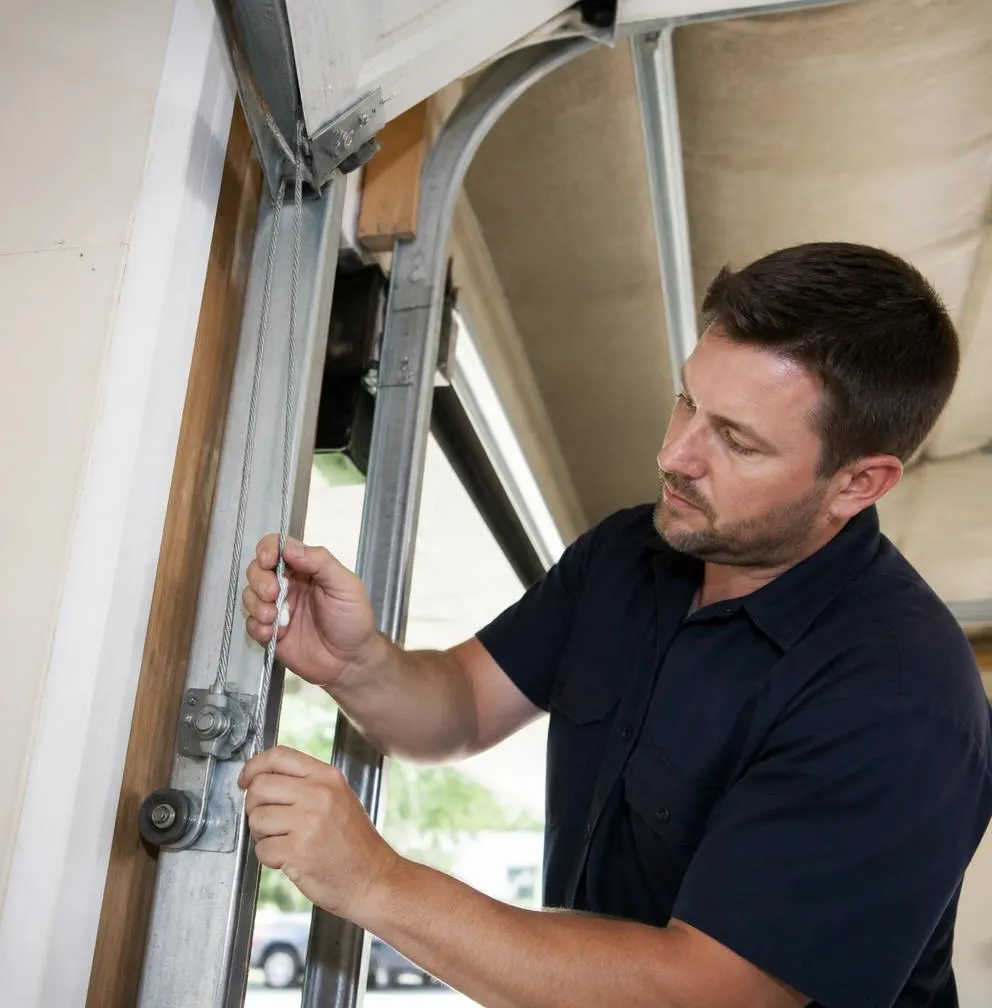
- Disconnect the opener (pull the emergency release cord) and move the door by hand. It should move smoothly and stay roughly where you leave it, halfway open, without dropping or flying up. If it doesn't, that's a spring balance problem, not an opener problem.
- Check the tracks for visible bends, gaps, or debris, especially near the bottom few feet where ice, sand, and road salt tend to collect.
- Look at the rollers and hinges for rust or dragging, which is common after a wet season.
- Only adjust travel limits if the door is stopping short or over-traveling with no physical obstruction, and make small adjustments, testing after each one.
If the door passes the hand-test and the track looks clean and straight, a small force adjustment might genuinely be appropriate. If it doesn't pass, more force is just going to wear out the opener faster while leaving the real problem untouched.
When to Call Lewes Garage Door Specialists
If the door doesn't move smoothly by hand, reverses unpredictably, or you've already turned the force up and it's started making new noises, that's the point to stop adjusting it yourself. We handle spring replacement and garage door opener repair and installation regularly for homes across Lewes, Rehoboth Beach, Milton, and the surrounding coastal communities, and a lot of what looks like an opener problem is actually a spring or alignment issue that's been masked by the force setting for months. We'll check the balance, the track, and the opener's actual settings, and set everything to work together instead of against each other.
If your garage door has been fighting its opener lately, call Lewes Garage Door Specialists and we'll get it diagnosed and running correctly — no guessing, no dial-turning required.