
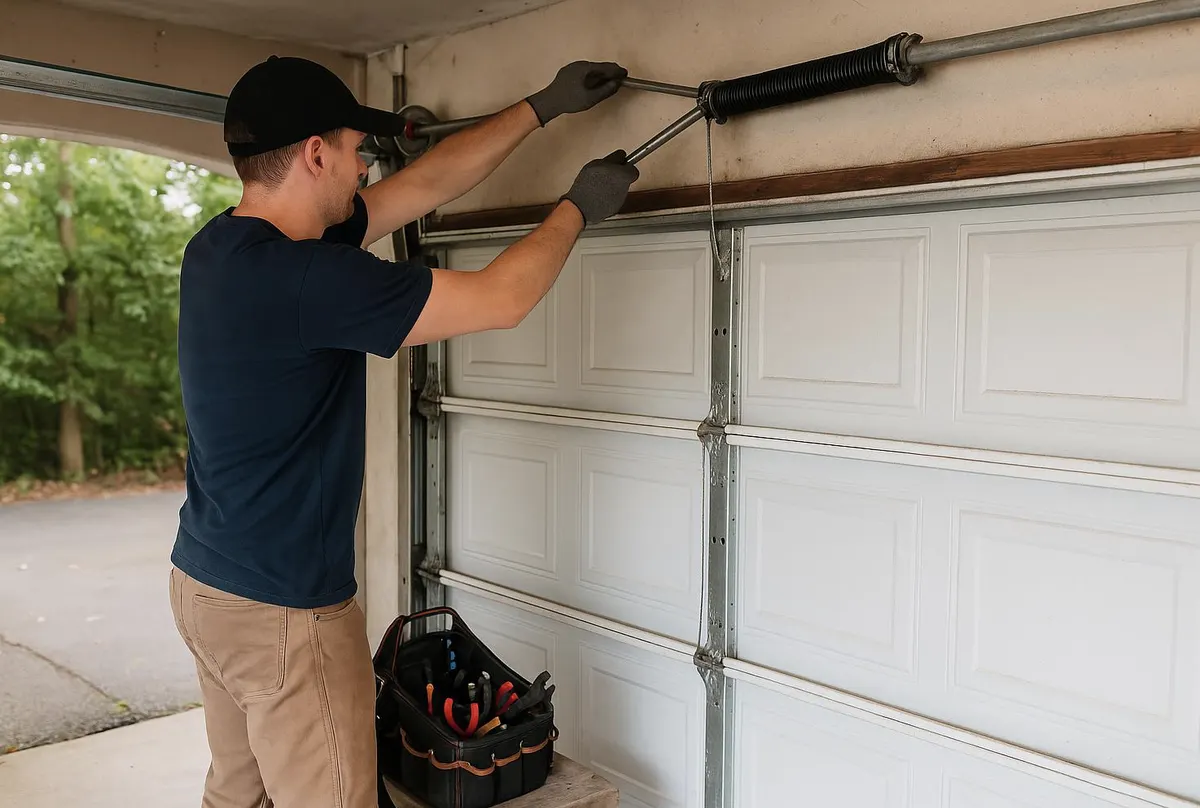
You're standing in the garage on a damp October morning, waiting for the door to finish its slow, grinding climb. One panel is dented from last year's storm debris, the paint is peeling where salt air has been working on it for a decade, and the opener strains a little more each time you push the button. You've already called about a repair once this year. Now you're wondering if it's time to just replace the whole thing — and what that's actually going to cost.
The honest answer is: it depends on a handful of specific choices. Here's a real breakdown of where the money goes, using national price ranges, so you can walk into that decision with your eyes open.
What Actually Drives the Price
A garage door price isn't one number — it's a stack of smaller decisions. The main ones are:
- Material: steel, wood, faux wood composite, aluminum, or fiberglass
- Construction: single-layer, double-layer (steel plus insulation), or triple-layer (steel-insulation-steel)
- Style: flush panel, raised panel, or carriage-house look with hardware and windows
- Size: single-car versus double-car openings
- Opener: whether you're keeping the existing one or replacing it too
- Installation complexity: old door removal, track or frame repairs, electrical work
Any one of these can swing the total by several hundred dollars, so two doors that look similar in a showroom can land very differently on an invoice.
Cost Ranges by Door Type
Basic Steel, Single-Layer
This is the entry point: a non-insulated steel door in a standard raised-panel style. Installed, these typically run in the $700 to $1,400 range for a single-car door, with double-car openings costing more. It's a reasonable option for a detached garage or a space you don't heat, but single-layer steel offers almost no insulation value and can rattle and flex in wind.
Insulated Steel, Double or Triple-Layer
Add a layer of polystyrene or polyurethane foam between two steel skins, and you get a stiffer, quieter, better-insulated door. Installed costs generally fall between $1,200 and $2,800, depending on the insulation grade and whether it's double- or triple-layer. For an attached garage, especially one near living space, this upgrade often pays for itself in comfort alone — Delaware winters bring real ice and cold snaps, and a poorly insulated door is a direct line for that cold air into the house.
Faux Wood / Composite Carriage Style
These doors mimic the look of wood carriage doors using steel or composite materials with applied overlays, hinges, and handles for the hardware look. Installed, expect something in the $1,800 to $4,000 range. They hold up better than real wood against humidity and salt air while still giving you the curb appeal upgrade.
Custom Wood Carriage Style
Real wood carriage doors, often custom-built with designer hardware, sit at the top of the range — commonly $3,000 to $10,000 or more, installed. They're striking, but wood demands more upkeep in a humid coastal climate: regular sealing and repainting to fight moisture swelling, warping, and rot.
Other Line Items That Move the Total
Beyond the door itself, a few things commonly add to the final bill:
- Opener replacement: adding a new opener typically adds a few hundred dollars, more if you want smart/app-connected features
- Old door removal and disposal: usually a modest add-on, but worth confirming it's included
- Track, spring, or frame repairs: if the existing hardware is worn or rusted, replacing it alongside the new door is cheaper than doing it separately later
- Windows and decorative hardware: glass inserts and faux hinges/handles on carriage-style doors add cost but also add resale appeal
What the Coastal Climate Should Factor Into Your Choice
Homes in this part of Delaware deal with a specific combination: humid summers, icy winters, heavy rain, and the occasional coastal storm. A few practical notes that apply whether you're in an older home or new construction:
- Look for galvanized or corrosion-resistant hardware — salt air accelerates rust on springs, tracks, and hinges faster than it would inland.
- If your garage shares a wall with living space, insulated steel is worth the upgrade for winter comfort and summer humidity control.
- Ask about wind load ratings if your home is exposed to open water or fields — a door rated for higher wind pressure resists bowing and buckling during storms.
- Real wood looks great but needs more seasonal maintenance here than it would in a drier climate.
Repair or Replace?
Not every tired-looking door needs full replacement. If the panels are sound and the problem is really a worn spring, a misaligned track, or an opener on its way out, a repair or spring replacement can extend the door's life for a fraction of the cost. Replacement makes more sense when you're seeing structural rust, warped or cracked panels, repeated breakdowns, or when you want the insulation and curb-appeal benefits a new door brings.
When to Call Lewes Garage Door Specialists
If you're not sure which side of that line you're on, that's exactly the kind of call worth making before you spend money either way. Lewes Garage Door Specialists will look at the actual condition of your door and hardware, give you an honest read on whether garage door repair will hold up or whether garage door installation is the better long-term investment, and walk you through door and insulation options suited to coastal weather. No upsell, just a straight answer based on what's in front of them.
If your garage door in Lewes, DE is showing its age — or you're just tired of guessing what's wrong with it — give Lewes Garage Door Specialists a call and get a straight assessment before winter sets in.